WASHINGTON IN MOURNING: JEANINE PIRRO ANNOUNCES THIRD ARREST IN MURDER OF CONGRESSIONAL INTERN — AND A WARNING THAT STUNS THE CAPITAL
A THIRD SUSPECT, AND A CITY ON EDGE
Federal prosecutors in Washington, D.C., have confirmed a new arrest in the murder of 21-year-old congressional intern Eric Tarpinian-Jachym, whose killing in late June shocked both Capitol Hill and the nation.
U.S. Attorney Jeanine Pirro identified the suspect as Naqwan Lucas, 18, now charged in connection with the June 30 shooting that also claimed the life of 22-year-old Zoey Kelley.
Two other men — Kelvin Thomas Jr. and Jailen Lucas — had already been charged with first-degree murder. The arrest marks what officials called “a critical step forward in a case that has exposed deep cracks in D.C.’s juvenile-justice system.”

THE NIGHT THAT CHANGED EVERYTHING
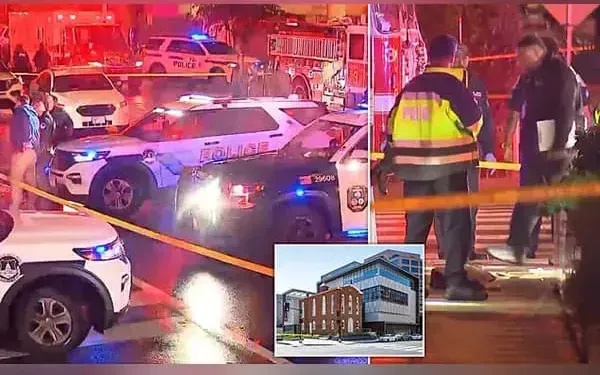
According to police reports, gunfire erupted around 10:28 p.m. near the 1200 block of 7th Street NW. Witnesses said multiple attackers exited a vehicle and opened fire.
Tarpinian-Jachym, a promising student interning for Rep. Ron Estes (R-KS), was struck by stray bullets and later died at a nearby hospital. Investigators have since determined the attack was targeted — but Eric wasn’t the target.
“He was simply in the wrong place at the wrong time,” said an MPD spokesperson.
“THIS DEATH WAS PREVENTABLE”
At a tense Thursday press briefing, Jeanine Pirro didn’t hold back. She revealed all three suspects were already known to the juvenile court system — and accused the city’s leadership of “catastrophic leniency.”
“We live in a district where killers are known to the juvenile court. That’s the problem,” Pirro said.
“The D.C. Council keeps protecting offenders under the guise of preserving their innocence — but where is the protection for the innocent victims?”
Her statement rippled through Washington, striking a nerve in a city struggling with a double-digit rise in homicides this year. Many residents saw it as a long-overdue reckoning.
A FAMILY’S HEARTBREAK
Eric’s parents, Tamara and Robert Jachym, issued a statement to Fox News Digital:
“We are heartbroken over the tragic and senseless loss of Eric — a young man full of purpose, promise, and kindness. He believed in making the world a fairer place.”
Friends and professors from the University of Massachusetts Amherst described him as “the embodiment of idealism.” His classmates organized candlelight vigils on both coasts.
“He wanted to serve — not for fame, but for good,” said fellow student Hannah Lee. “He believed politics could heal. Now we’re left trying to heal without him.”
THE NUMBERS BEHIND THE OUTRAGE
Homicides in Washington D.C. are up 18 percent over last year, with nearly 220 killings recorded so far. Many involve repeat juvenile offenders.
Residents say fear has become routine.
“We hear gunfire almost every week,” said Marcia Williams, a mother of two from Shaw. “They talk about reform — but reform means nothing if our kids can’t walk home alive.”
Community activists are now calling for tougher sentencing and a full overhaul of the juvenile-rehabilitation system, which they describe as “failing both victims and offenders.”
PIRRO’S PROMISE OF FEDERAL ACCOUNTABILITY
Pirro vowed to pursue the case “to the fullest extent of the law.” Her office will present evidence before a grand jury in early 2026, and the suspects could face life sentences without parole if convicted.
“Justice delayed is justice denied,” she declared.
“But justice for Eric — that’s what we intend to deliver.”
She also announced federal cooperation with D.C. police and the Department of Justice to combat repeat-offender violence. A $25,000 reward remains available for anyone providing additional information.
POLITICAL FALLOUT
Pirro’s criticism ignited a fresh political firestorm.
Members of the D.C. Council defended their rehabilitative approach, arguing incarceration alone doesn’t break the cycle of poverty and crime.
But federal prosecutors — and many residents — say compassion has morphed into negligence.
“We’ve reached a point where ideology is costing lives,” Pirro said. “There’s nothing compassionate about letting violent offenders walk free to kill again.”
Former federal prosecutor Michael Kline agreed: “It’s a pattern — known offenders, released early, escalating violence. Until there’s accountability, these tragedies will keep happening.”

THE WHITE HOUSE RESPONDS
Late Thursday, a White House spokesperson pledged cooperation across federal and local law enforcement.
“The administration will ensure that justice is fully served,” the statement read. “We will not tolerate the senseless killing of innocent Americans.”
While the message avoided direct reference to D.C.’s policies, it underscored mounting pressure on city officials to reverse the crime trend.
REMEMBERING ERIC
At UMass Amherst, the political-science department issued a tribute praising Eric’s “commitment to fairness and civic duty.”
A scholarship fund in his name is already being organized.
Rep. Ron Estes called his intern’s death “an unspeakable loss.”
“Eric represented the best of America’s youth — intelligent, engaged, determined to make a difference. His death is a tragedy that should never have happened.”
A CITY AT A CROSSROADS
The murder of Eric Tarpinian-Jachym has become more than a criminal case — it’s now a referendum on Washington’s approach to justice.
Will the city continue to prioritize rehabilitation for offenders, or will it pivot toward stricter accountability? For Pirro, the choice is moral, not political.

“This isn’t just about one crime,” she said. “It’s about whether we’re going to protect our children — or keep burying them.”
Outside the federal courthouse, supporters held signs reading “Justice for Eric” and “Enough is Enough.”
One of them, Alex Grant, a fellow intern, summed up the mood:
“He believed in America. He trusted its institutions. The least we can do now is make sure they don’t fail him again.”
THE FIGHT FOR JUSTICE CONTINUES
With three suspects in custody and a community demanding reform, the case has already reshaped Washington’s conversation about youth crime and accountability.

Pirro’s final words at the press conference still echo through the capital:
“Justice delayed is justice denied — but justice, real justice, for Eric, Zoey, and this city is what we’re going to deliver.”
As D.C. faces its moral crossroads, one young intern’s legacy may yet force the nation’s capital to confront its own conscience.
News
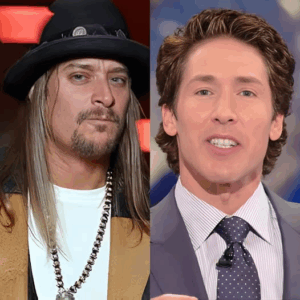
The auditorium glitched into silence the moment Joel Osteen leaned toward the mic and delivered a line no pastor is supposed to say in public. Even the stage lights seemed to hesitate as his voice echoed out: “God will NEVER forgive you.” People froze mid-applause. Kid Rock’s head snapped up. And in that weird, suspended moment, the crowd realized something had just detonated off-script.
The crowd expected an inspiring evening of testimony, music, and conversation. What they got instead was one of the most explosive on-stage confrontations ever witnessed inside a church auditorium. It happened fast—36 seconds, to be exact.But those 36 seconds would…

The room stalled mid-breath the moment Mike Johnson snapped open a black folder that wasn’t on any official docket. Cameras zoomed. Staffers froze. The label on the cover — CLINTON: THE SERVER SAGA — hit like a siren. Johnson leaned toward the mic, voice sharpened enough to scratch glass, and read a line that made every timeline jolt: “Her email is criminal.”
Here’s the thing about made-for-TV government: it knows exactly when to hold a beat. Tuesday’s oversight hearing had the rhythm down cold—routine questioning, polite skirmishes, staffers passing notes like we’re all pretending this is not a stage. And then Mike…

🔥 “THE FLOOR SHOOK BEFORE ANYONE COULD SPEAK.” — Investigator Dane Bonaro didn’t walk into the chamber — he tore through it, slamming a blood-red binder onto the desk with a force that made the microphones hiss. The label on the cover froze the room mid-breath: “1.4 MILLION SHADOW BALLOTS.” He locked eyes with the council and snarled, “You want the truth? Start with this.” For one suspended second, every camera operator lifted their lens like they’d just smelled a political explosion.
Here’s a scene you’ve watched a hundred times if you’ve spent enough hours in hearing rooms and greenrooms: a witness with a flair for performance, a committee hungry for a moment, and a gallery of reporters quietly betting which line…

🔥 “THE SMILE FLICKERED—AND THE ENTIRE STUDIO FELT IT.” — Laura Jarrett walked onto the Saturday TODAY set with the kind of calm, polished glow producers dream of. Cameras glided, lights warmed, and the energy felt like a coronation. But right as she settled between Peter Alexander and Joe Fryer, something shifted — a tiny hesitation in her smile, the kind that makes everyone watching sit up a little straighter. And then it came: a voice from outside the studio, sharp enough to snap the broadcast in half. For a full second, no one moved.
Here’s the thing about TV milestones: they’re designed for easy applause. A new co-anchor takes the desk, the chyron beams, the studio lights do their soft-shoe, and everyone is on their best behavior. It’s a ritual as old as morning-show…

🔥 “THE ROOM STOPPED LIKE SOMEONE CUT THE OXYGEN.” — What’s racing across timelines right now isn’t framed as a speech, or an interview, or even a moment. It’s being told like a rupture — the instant Erika Kirk, normally armored in composure, let a single tear fall while standing beside Elon Musk. Witnesses in these viral retellings swear the tear didn’t look emotional… it looked inevitable, like something finally broke through her defenses. And when Musk turned toward her, the entire audience leaned in as if they already knew the world was about to shift.
It was billed as a calm forum on human rights—an hour for big ideas like freedom, transparency, and the obligations that come with having a public voice. The stage was washed in soft gold, the kind of lighting that flatters…
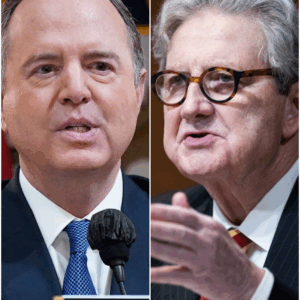
🔥 “THE ROOM WENT DEAD IN UNDER A SECOND.” — What unfolded inside the Senate chamber didn’t look like a hearing anymore — it looked like a trap snapping shut. Adam Schiff sat back with that confident half-smile, clutching a 2021 DOJ memo like it was the final move in a game he thought he’d already won. Staffers say he timed his line perfectly — “Your rhetoric ignores the facts, Senator. Time to face reality.” But instead of rattling Kennedy, something in the senator’s expression made even reporters lean forward, sensing the shift before anyone spoke again.
It didn’t look like much at first—another oversight hearing, another afternoon in a Senate chamber where the oxygen gets thinned out by procedure. Then Adam Schiff leaned into a microphone with a lawyer’s confidence, and John Neely Kennedy pulled out…
End of content
No more pages to load