In the world of hip-hop, drama is never far behind. But this time, Curtis “50 Cent” Jackson isn’t beefing with another rapper or squaring off with a rival on social media. Instead, the multi-platinum mogul is taking his ex and the mother of his son, Shaniqua Tompkins, to court in a legal battle that’s as personal as it is high stakes.
The issue? The rights to her own life story—and whether she can speak about her past with 50 Cent in public, online, or anywhere else without his company’s permission.
A Lawsuit Nearly Two Decades in the Making
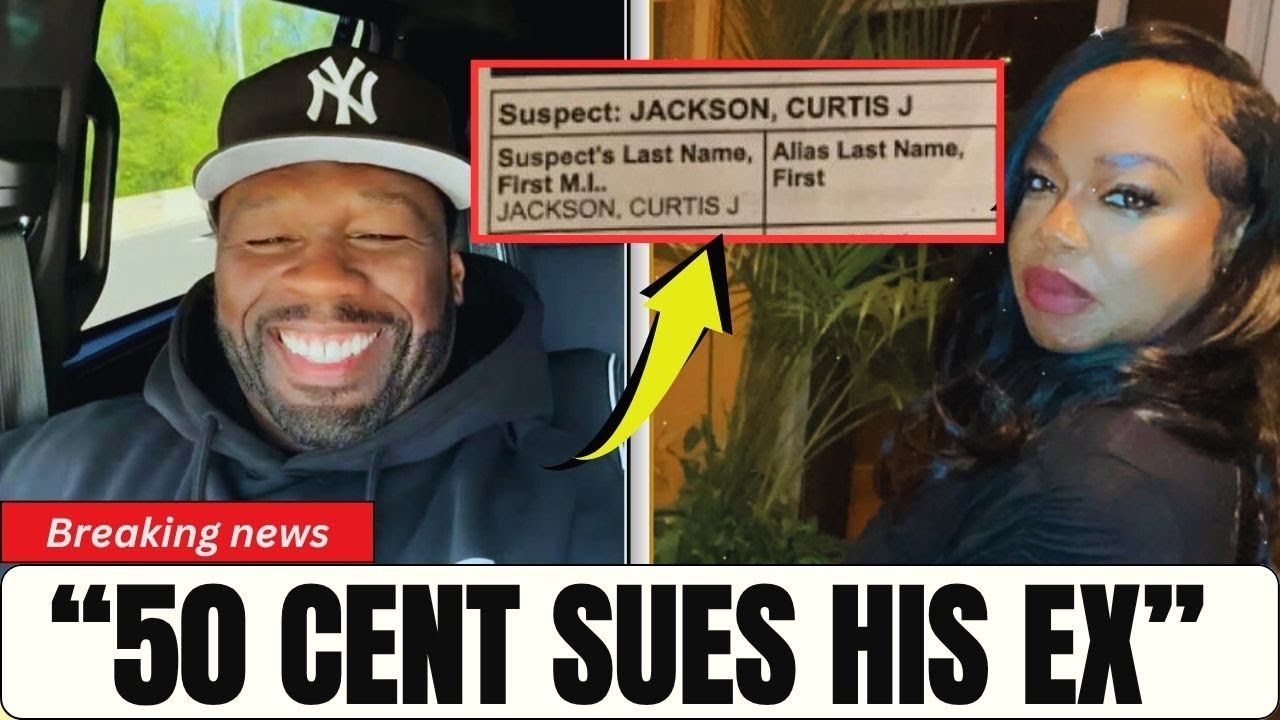
According to court documents filed this week, 50 Cent’s company, G-Unit Books, is suing Tompkins for allegedly violating a legally binding agreement signed back in 2007. The core of the dispute is what’s known in the entertainment industry as “life rights”—the ability to tell, sell, or otherwise exploit the details of your own life for books, movies, interviews, and more.
G-Unit claims Tompkins “irrevocably and exclusively” signed away those rights almost 20 years ago, at a time when 50 Cent was still riding high off the massive success of his debut album “Get Rich or Die Tryin’.” In the pre-Instagram, pre-podcast era, no one could have predicted just how lucrative telling your side of the story could become in the age of social media.
But the world has changed—and so has the value of personal narratives. Now, Tompkins is allegedly sharing her story online, posting about her relationship with 50 Cent and their turbulent history. G-Unit says that’s a violation of the contract, and they want the court to put a stop to it—fast.
What’s at Stake: More Than Just Money
This isn’t just about royalties or book deals. At the heart of the lawsuit is control—over the narrative, the brand, and the legacy of one of hip-hop’s most influential figures. 50 Cent has built an empire not just on his music, but on his ability to shape his own story, both in the media and in the courtroom.
According to the lawsuit, Tompkins agreed in 2007 not to “publicly disclose, exploit, or commercialize” any aspect of her life story or her relationship with 50 Cent without G-Unit’s explicit approval. That means no memoirs, no tell-all interviews, no viral TikToks, no podcasts—nothing that could make her story public without the company’s green light.
And G-Unit is playing hardball. The company’s legal team is reminding the court (and the public) that Tompkins willingly signed those rights away at a time when 50 Cent was at the height of his fame and fortune. The ink, they argue, is still dry—and the contract is still in full force.
A History of Conflict
If you’ve followed 50 Cent’s personal life, you know this isn’t the first time the rapper and Tompkins have clashed. Their relationship has been rocky for years, especially when it comes to co-parenting their son, Marquise Jackson.
Public spats on social media, heated interviews, and years of back-and-forth accusations have defined their post-breakup dynamic. This lawsuit, then, feels less like a new battle and more like the latest chapter in a long, bitter saga between two people who were once family.
For Tompkins, the ability to tell her story is about more than just money—it’s about reclaiming her voice after years of being painted as a villain in the public eye. For 50 Cent, it’s about protecting his brand, his business, and the carefully curated image he’s spent decades building.
Why Now? The Power of Going Viral
The timing of the lawsuit is no coincidence. In 2025, telling your side of the story isn’t just a cathartic act—it’s big business. From podcasts to TikTok to streaming documentaries, personal narratives are a hot commodity. One viral moment can launch a career, change public opinion, or spark a cultural conversation.
G-Unit’s legal team argues that Tompkins’ recent online activity—sharing stories, posting about her past with 50, and even hinting at potential book projects—is a direct violation of the agreement she signed. They’re asking the court to enforce the contract and prevent her from “exploiting” her life story without their consent.
And knowing 50 Cent, he’s not one to let a challenge go unanswered. Whether it’s music rights, TV deals, or personal drama, he’s built a reputation for being relentless when it comes to protecting his interests. If G-Unit Books says those rights are theirs, you can bet they’re ready to fight for them—no matter how messy it gets.
A Cautionary Tale for the Age of Oversharing
This case is about more than just two exes fighting in court. It’s a cautionary tale for anyone who’s ever signed away their rights without reading the fine print, or underestimated the long-term impact of a legally binding agreement.
In 2007, the idea that someone could monetize their life story on social media was almost unthinkable. Today, it’s a multi-billion-dollar industry. Influencers, reality stars, and even everyday people can turn their personal experiences into content, cash, and clout.
But when you’re tied to a superstar like 50 Cent—by blood or by business—nothing is ever simple. Contracts matter. And as this lawsuit proves, the past has a way of catching up, no matter how much time has passed.’
What Happens Next?
The case is expected to move quickly, with both sides gearing up for a battle that could set a precedent for similar disputes in the entertainment world. Legal experts say the outcome could hinge on the exact wording of the 2007 agreement—and whether the court believes Tompkins knowingly and willingly gave up her rights, or if the contract is too vague to enforce in the age of social media.
For now, both 50 Cent and Tompkins have remained publicly silent about the lawsuit, letting their lawyers do the talking. But fans are watching closely, eager to see how the drama unfolds—and what it might mean for the future of celebrity storytelling.
Bottom Line: Read the Fine Print
If there’s one lesson to take away from this high-profile showdown, it’s this: when you’re dealing with 50 Cent, you better read the fine print. Because nothing gets past him—not then, not now, not ever.
As pop culture continues to blur the lines between private life and public entertainment, the battle over who owns your story is only going to get fiercer. And in the court of 50 Cent, you can be sure the drama is just getting started.
News

The auditorium glitched into silence the moment Joel Osteen leaned toward the mic and delivered a line no pastor is supposed to say in public. Even the stage lights seemed to hesitate as his voice echoed out: “God will NEVER forgive you.” People froze mid-applause. Kid Rock’s head snapped up. And in that weird, suspended moment, the crowd realized something had just detonated off-script.
The crowd expected an inspiring evening of testimony, music, and conversation. What they got instead was one of the most explosive on-stage confrontations ever witnessed inside a church auditorium. It happened fast—36 seconds, to be exact.But those 36 seconds would…

The room stalled mid-breath the moment Mike Johnson snapped open a black folder that wasn’t on any official docket. Cameras zoomed. Staffers froze. The label on the cover — CLINTON: THE SERVER SAGA — hit like a siren. Johnson leaned toward the mic, voice sharpened enough to scratch glass, and read a line that made every timeline jolt: “Her email is criminal.”
Here’s the thing about made-for-TV government: it knows exactly when to hold a beat. Tuesday’s oversight hearing had the rhythm down cold—routine questioning, polite skirmishes, staffers passing notes like we’re all pretending this is not a stage. And then Mike…

🔥 “THE FLOOR SHOOK BEFORE ANYONE COULD SPEAK.” — Investigator Dane Bonaro didn’t walk into the chamber — he tore through it, slamming a blood-red binder onto the desk with a force that made the microphones hiss. The label on the cover froze the room mid-breath: “1.4 MILLION SHADOW BALLOTS.” He locked eyes with the council and snarled, “You want the truth? Start with this.” For one suspended second, every camera operator lifted their lens like they’d just smelled a political explosion.
Here’s a scene you’ve watched a hundred times if you’ve spent enough hours in hearing rooms and greenrooms: a witness with a flair for performance, a committee hungry for a moment, and a gallery of reporters quietly betting which line…

🔥 “THE SMILE FLICKERED—AND THE ENTIRE STUDIO FELT IT.” — Laura Jarrett walked onto the Saturday TODAY set with the kind of calm, polished glow producers dream of. Cameras glided, lights warmed, and the energy felt like a coronation. But right as she settled between Peter Alexander and Joe Fryer, something shifted — a tiny hesitation in her smile, the kind that makes everyone watching sit up a little straighter. And then it came: a voice from outside the studio, sharp enough to snap the broadcast in half. For a full second, no one moved.
Here’s the thing about TV milestones: they’re designed for easy applause. A new co-anchor takes the desk, the chyron beams, the studio lights do their soft-shoe, and everyone is on their best behavior. It’s a ritual as old as morning-show…

🔥 “THE ROOM STOPPED LIKE SOMEONE CUT THE OXYGEN.” — What’s racing across timelines right now isn’t framed as a speech, or an interview, or even a moment. It’s being told like a rupture — the instant Erika Kirk, normally armored in composure, let a single tear fall while standing beside Elon Musk. Witnesses in these viral retellings swear the tear didn’t look emotional… it looked inevitable, like something finally broke through her defenses. And when Musk turned toward her, the entire audience leaned in as if they already knew the world was about to shift.
It was billed as a calm forum on human rights—an hour for big ideas like freedom, transparency, and the obligations that come with having a public voice. The stage was washed in soft gold, the kind of lighting that flatters…

🔥 “THE ROOM WENT DEAD IN UNDER A SECOND.” — What unfolded inside the Senate chamber didn’t look like a hearing anymore — it looked like a trap snapping shut. Adam Schiff sat back with that confident half-smile, clutching a 2021 DOJ memo like it was the final move in a game he thought he’d already won. Staffers say he timed his line perfectly — “Your rhetoric ignores the facts, Senator. Time to face reality.” But instead of rattling Kennedy, something in the senator’s expression made even reporters lean forward, sensing the shift before anyone spoke again.
It didn’t look like much at first—another oversight hearing, another afternoon in a Senate chamber where the oxygen gets thinned out by procedure. Then Adam Schiff leaned into a microphone with a lawyer’s confidence, and John Neely Kennedy pulled out…
End of content
No more pages to load