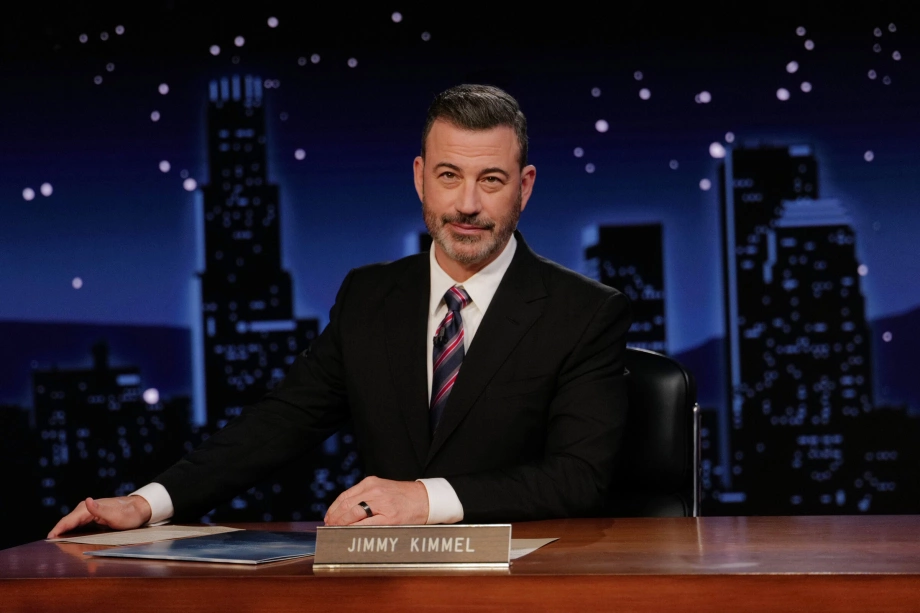
Late-night television has long thrived on satire, monologues, and cultural commentary. But in September 2025, the delicate balance between comedy and controversy collapsed in dramatic fashion when ABC announced that Jimmy Kimmel Live!—the network’s longest-running late-night program—was being pulled from the air indefinitely.
The decision followed remarks Kimmel made about the death of conservative activist Charlie Kirk, comments that ignited outrage across political and media circles and ultimately forced ABC, its affiliates, and its parent company Disney into a defensive posture. What began as a fiery late-night joke spiraled into a cultural earthquake, shaking both Hollywood and Washington.
The Breaking Point
On Monday, September 15, just days after Kirk was fatally shot during a speaking event at Utah Valley University, Kimmel addressed the incident in his monologue. Speaking to his studio audience, he didn’t mince words:
“We hit some new lows over the weekend with the MAGA gang trying to characterize this kid who killed Charlie Kirk as anything other than one of them,” Kimmel said.
The remark, delivered with his trademark blend of sharpness and sarcasm, struck a nerve. For some viewers, it was a pointed critique of political spin. For others, it was an offensive overstep at a time of grief.
Two days later, ABC’s largest affiliate group, Nexstar Media, announced it would preempt Jimmy Kimmel Live! “for the foreseeable future.” Hours after that, ABC itself confirmed the program was being pulled network-wide.
The Official Word
“Jimmy Kimmel Live! has been indefinitely pulled,” an ABC spokesperson told PEOPLE on September 17.
Nexstar Media, which owns more than 200 stations across 116 markets, issued its own strongly worded statement:
“We strongly object to recent comments made by Mr. Kimmel concerning the killing of Charlie Kirk and will replace the show with other programming in our ABC-affiliated markets.”
Andrew Alford, president of Nexstar’s broadcasting division, added further clarity:
“Mr. Kimmel’s comments about the death of Mr. Kirk are offensive and insensitive at a critical time in our national political discourse. Continuing to give Mr. Kimmel a broadcast platform in the communities we serve is simply not in the public interest at the current time.”
The language signaled more than just corporate discomfort. It suggested a coordinated effort between local affiliates and ABC leadership to cool tensions before they spiraled further.
A Longtime Host, A Sudden Silence
Kimmel’s removal is a seismic moment for late-night television. Since premiering in 2003, Jimmy Kimmel Live! has been a fixture of ABC’s lineup, rivaling NBC’s Tonight Show and CBS’s Late Show across two decades.
Kimmel himself has become a household name, balancing sharp political humor with emotional vulnerability. His on-air monologues about gun violence, healthcare, and social issues often blurred the line between comedy and advocacy, earning both praise and scorn.
Now, after more than 20 years in the chair, his show is dark—its absence a void that feels symbolic of the political and cultural fault lines running through American entertainment.
The Trump Factor
Kimmel’s latest controversy cannot be separated from his long-running feud with former president Donald Trump. For years, Trump has targeted Kimmel, accusing him of being “talentless” and “a disgrace.”
After CBS canceled The Late Show with Stephen Colbert in July 2025, Trump took to Truth Social with a warning:
“The word is, and it’s a strong word at that, Jimmy Kimmel is NEXT to go in the untalented Late Night Sweepstakes.”
When ABC’s decision came just two months later, Trump’s prediction looked less like speculation and more like inevitability. His allies amplified the narrative, framing Kimmel’s suspension as a victory in the culture wars.
Political and Cultural Fallout
The decision to suspend Kimmel has polarized audiences.
Supporters of Kirk argue Kimmel crossed a line, mocking a tragedy for partisan gain. For them, ABC’s move represents accountability.
Kimmel’s defenders, however, see the suspension as corporate capitulation to political pressure—a chilling signal for free speech in entertainment.
“Pulling Jimmy Kimmel off the air for criticizing the far right is more than censorship,” said media scholar Hannah Krieger. “It’s an admission that advertisers and affiliates now hold veto power over political comedy.”
The reaction online was equally divided. Hashtags like #CancelKimmel and #BringBackKimmel trended simultaneously, reflecting the nation’s fractured media landscape.
ABC’s Precarious Position
The suspension comes at a delicate time for ABC and its parent company Disney. Both have faced mounting political scrutiny, particularly from conservative lawmakers and activist groups.
“Disney doesn’t want to be seen as partisan, but it’s increasingly trapped in battles it can’t avoid,” explained PR strategist Linda Tran. “By pulling Kimmel, they’ve appeased affiliates but risk alienating viewers who prize authenticity.”
ABC now faces the challenge of filling its late-night slot. For the time being, affiliates are running reruns and alternate programming, but long-term strategies remain unclear.
The Broader Crisis in Late Night
Kimmel’s suspension is just the latest sign of upheaval in late-night television. Ratings have been shrinking for years as audiences migrate to streaming platforms and short-form content.
In July, CBS announced the end of The Late Show with Stephen Colbert, citing financial losses.
NBC’s Tonight Show with Jimmy Fallon has faced ratings dips and questions about its long-term future.
Streaming and digital-first programs are siphoning away younger viewers.
In this context, ABC’s move isn’t just about one host—it’s about an entire format under siege.

Kimmel’s Next Move
For now, Kimmel has remained silent. Representatives have declined comment, and his social media accounts have been dormant since the suspension.
But Kimmel has hinted at walking away before. In a 2024 Los Angeles Times interview, he admitted his 2022 contract might be his last. “That seems like enough,” he said at the time.
Whether this is the end of Jimmy Kimmel Live! or simply a hiatus remains unclear. What is certain is that Kimmel’s legacy—as a comedian who blurred the line between humor and political conscience—has already been cemented.
A Cultural Earthquake
The absence of Jimmy Kimmel Live! from late-night television is more than a programming change. It is a cultural moment that highlights the fragility of comedy in a polarized age.
For ABC, the suspension reflects a careful, corporate calculation: protect affiliates, advertisers, and audiences at the expense of one of its most bankable stars. For Kimmel, it raises questions about whether his career in late-night is over—or if this silence will only amplify his voice in other arenas.
And for America, it underscores a broader reckoning: in a media landscape where every joke can spark outrage, where every word can be weaponized, who decides what is permissible in public discourse?
The silence where Jimmy Kimmel’s monologue once stood isn’t just programming. It’s a cultural earthquake, reverberating through television, politics, and the very notion of free speech.
News
The auditorium glitched into silence the moment Joel Osteen leaned toward the mic and delivered a line no pastor is supposed to say in public. Even the stage lights seemed to hesitate as his voice echoed out: “God will NEVER forgive you.” People froze mid-applause. Kid Rock’s head snapped up. And in that weird, suspended moment, the crowd realized something had just detonated off-script.
The crowd expected an inspiring evening of testimony, music, and conversation. What they got instead was one of the most explosive on-stage confrontations ever witnessed inside a church auditorium. It happened fast—36 seconds, to be exact.But those 36 seconds would…
The room stalled mid-breath the moment Mike Johnson snapped open a black folder that wasn’t on any official docket. Cameras zoomed. Staffers froze. The label on the cover — CLINTON: THE SERVER SAGA — hit like a siren. Johnson leaned toward the mic, voice sharpened enough to scratch glass, and read a line that made every timeline jolt: “Her email is criminal.”
Here’s the thing about made-for-TV government: it knows exactly when to hold a beat. Tuesday’s oversight hearing had the rhythm down cold—routine questioning, polite skirmishes, staffers passing notes like we’re all pretending this is not a stage. And then Mike…

🔥 “THE FLOOR SHOOK BEFORE ANYONE COULD SPEAK.” — Investigator Dane Bonaro didn’t walk into the chamber — he tore through it, slamming a blood-red binder onto the desk with a force that made the microphones hiss. The label on the cover froze the room mid-breath: “1.4 MILLION SHADOW BALLOTS.” He locked eyes with the council and snarled, “You want the truth? Start with this.” For one suspended second, every camera operator lifted their lens like they’d just smelled a political explosion.
Here’s a scene you’ve watched a hundred times if you’ve spent enough hours in hearing rooms and greenrooms: a witness with a flair for performance, a committee hungry for a moment, and a gallery of reporters quietly betting which line…
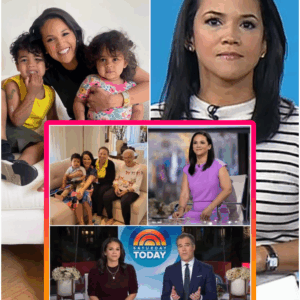
🔥 “THE SMILE FLICKERED—AND THE ENTIRE STUDIO FELT IT.” — Laura Jarrett walked onto the Saturday TODAY set with the kind of calm, polished glow producers dream of. Cameras glided, lights warmed, and the energy felt like a coronation. But right as she settled between Peter Alexander and Joe Fryer, something shifted — a tiny hesitation in her smile, the kind that makes everyone watching sit up a little straighter. And then it came: a voice from outside the studio, sharp enough to snap the broadcast in half. For a full second, no one moved.
Here’s the thing about TV milestones: they’re designed for easy applause. A new co-anchor takes the desk, the chyron beams, the studio lights do their soft-shoe, and everyone is on their best behavior. It’s a ritual as old as morning-show…
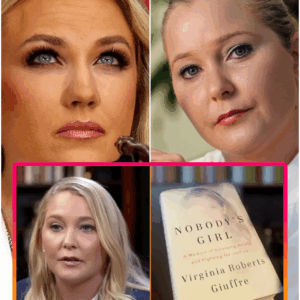
🔥 “THE ROOM STOPPED LIKE SOMEONE CUT THE OXYGEN.” — What’s racing across timelines right now isn’t framed as a speech, or an interview, or even a moment. It’s being told like a rupture — the instant Erika Kirk, normally armored in composure, let a single tear fall while standing beside Elon Musk. Witnesses in these viral retellings swear the tear didn’t look emotional… it looked inevitable, like something finally broke through her defenses. And when Musk turned toward her, the entire audience leaned in as if they already knew the world was about to shift.
It was billed as a calm forum on human rights—an hour for big ideas like freedom, transparency, and the obligations that come with having a public voice. The stage was washed in soft gold, the kind of lighting that flatters…
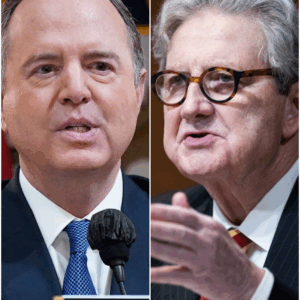
🔥 “THE ROOM WENT DEAD IN UNDER A SECOND.” — What unfolded inside the Senate chamber didn’t look like a hearing anymore — it looked like a trap snapping shut. Adam Schiff sat back with that confident half-smile, clutching a 2021 DOJ memo like it was the final move in a game he thought he’d already won. Staffers say he timed his line perfectly — “Your rhetoric ignores the facts, Senator. Time to face reality.” But instead of rattling Kennedy, something in the senator’s expression made even reporters lean forward, sensing the shift before anyone spoke again.
It didn’t look like much at first—another oversight hearing, another afternoon in a Senate chamber where the oxygen gets thinned out by procedure. Then Adam Schiff leaned into a microphone with a lawyer’s confidence, and John Neely Kennedy pulled out…
End of content
No more pages to load